UK's Incoming Gambling Regulations Poised to Squeeze Smaller Casino Operators
UK's Incoming Gambling Regulations Poised to Squeeze Smaller Casino Operators

The Regulatory Overhaul Taking Shape
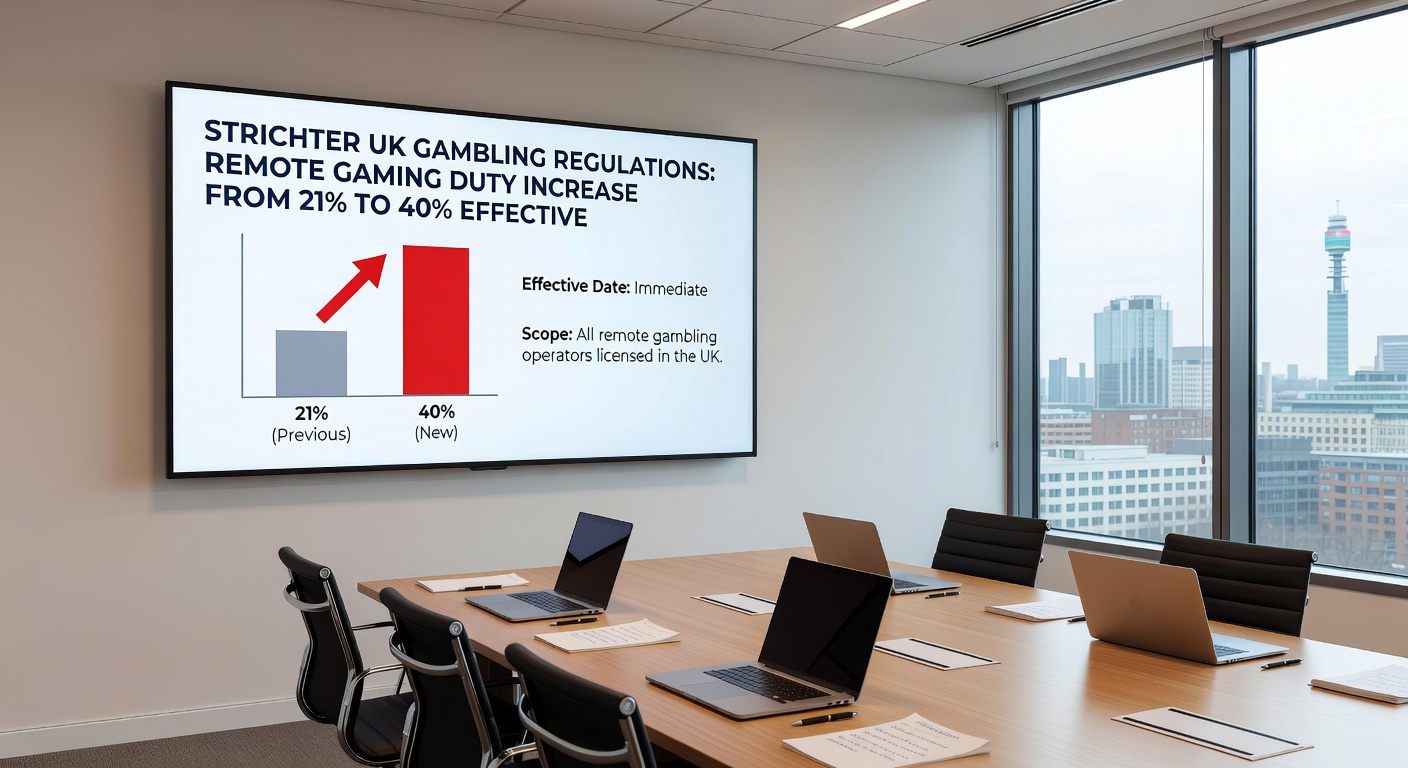
Stricter UK gambling regulations loom large for the casino sector, particularly with the Remote Gaming Duty jumping from 21% to 40% come April 2026, a move that detailed in official government updates aims to reshape how operators handle online betting revenue while prioritizing player safeguards. And it's not just the tax hike; affordability checks demand operators verify customers' financial stability before allowing high-stakes play, marketing restrictions curb aggressive ads that once drew crowds, and beefed-up anti-money laundering measures require constant transaction monitoring, all enforced by the UK Gambling Commission to protect vulnerable players from harm.
These changes, rolling out in phases, build on earlier tweaks like those previewed in late 2025 consultations, yet experts note how the full weight hits hardest right as spring 2026 unfolds, with March serving as a final ramp-up period for compliance prep. Operators scramble now to audit systems, train staff, and rework budgets, since non-compliance risks hefty fines or license revocations that could shutter doors overnight.
How Smaller Operators Feel the Pinch
Smaller casino operators, those independent outfits running a handful of sites or land-based venues with lean teams, face the brunt because compliance costs skyrocket without the economies of scale larger firms enjoy; data from industry reports reveals setup for affordability checks alone can run £500,000 to £1 million per operator, while ongoing verification tech drains another £100,000 yearly for modest players. But here's the thing: big players like Entain or Flutter consolidate resources across empires, spreading costs thin, whereas a small operator with 50 employees can't pivot as nimbly, leading to slashed margins that turn profitable ventures unviable.
Take one regional casino group in the Midlands, where managers confide that marketing curbs—banning bonuses over certain thresholds and VIP inducements—slash customer acquisition by 30-40%, per internal figures shared in sector forums; without those tools, footfall dips, revenue follows, and the 40% duty on what's left compounds the bleed. Anti-money laundering upgrades add layers too, mandating AI-driven surveillance that smaller shops outsource at premium rates, since building in-house demands expertise they lack, and that's before audits from the Gambling Commission tie up weeks of admin time each quarter.
Compliance Costs Breaking the Bank
Affordability checks stand out as the priciest hurdle, requiring real-time income proofs and spending caps that smaller operators implement via third-party fintechs costing up to 5% of gross gaming revenue, figures that research from trade bodies like the Betting and Gaming Council confirm hit independents hardest; larger firms negotiate bulk deals, dropping that to under 2%. Marketing restrictions compound this by axing personalized emails and social pushes, channels small operators relied on to compete, so they pivot to costlier SEO or partnerships that barely dent the void.
Yet anti-money laundering measures demand the most vigilance, with enhanced due diligence on high-rollers and transaction flags triggering manual reviews; one study from compliance consultants found small operators spend 15-20 hours weekly per compliance officer on these, versus 5-7 for corporates with automated suites. And as April 2026 nears, with March bringing pilot enforcement waves, those without buffers risk immediate penalties—fines starting at £10,000 per breach escalate fast, pushing some toward voluntary wind-downs before the deadline bites.
Larger Firms Thrive Amid the Shakeout
What's interesting is how giants weather this storm; companies like William Hill's parent or Evolution Gaming leverage global tech stacks for seamless adaptation, absorbing the duty hike through diversified offshore ops or hedging strategies that small players can't touch, while their scale lets them lobby effectively during consultations. Observers in the sector point to past consolidations—like the 2023 wave post-Brexit rules—where mergers swallowed 15% of independents, and data suggests similar patterns now, with potential closures numbering 20-30 smaller operators by mid-2026 if trends hold.
People who've tracked this beat recall how earlier stake limits on slots weeded out fringe sites, consolidating market share for the top five firms from 60% to over 75%; the Remote Gaming Duty spike accelerates that, taxing online remote games heavily while land-based venues dodge some pain, yet even there, integrated ops favor the big leagues. So smaller outfits explore mergers or niche pivots—like focusing on low-stakes social gaming—but time runs short as compliance deadlines loom.
Player Protection at the Core
The UK Gambling Commission drives these shifts with player protection front and center, mandating checks that flag risky behaviors early; statistics show problem gambling rates hovered at 0.5% pre-reforms, but regulators aim lower through proactive interventions, even if operators grumble about false positives scaring off casual punters. And while small operators bear uneven loads, the framework promises a cleaner industry long-term, with fewer scandals like the 2022 money laundering probes that tainted independents.
Turns out, enforcement ramps up in March 2026 with advisory audits, giving a grace window before full April rollout; those who adapt tout improved trust metrics, as surveys indicate 68% of players favor safeguards despite minor inconveniences. But for cash-strapped small timers, it's a race against the clock, balancing survival with the greater good the Commission champions.
Market Consolidation on the Horizon
Potential closures ripple wide; industry forecasts predict 10-15% of small online casino licenses lapsing by 2027, funneling users to surviving giants and fostering oligopoly vibes that echo US trends post-PASPA. Experts who've modeled this note how duty hikes alone erode 15-20% of net profits for low-volume sites, while compliance doubles overheads, creating a perfect storm where sell-offs to corporates become the only out.
One case surfaces from Scotland, where a boutique operator folded pre-emptively after duty projections wiped viability; they cited £250,000 in unrecoverable setup costs, a tale echoed in whispers across forums. Larger firms snap up assets cheap, bolstering portfolios, so the landscape tilts further toward behemoths, with innovation potentially stifled as risk-averse giants dominate.
Looking Ahead: Adaptation or Exit?
As 2026 unfolds, smaller UK casino operators navigate a tightrope of reform, where the Remote Gaming Duty's 40% bite, layered with affordability, marketing, and AML demands, tests resilience like never before; the Gambling Commission holds firm on protections, yet the squeeze sparks real fears of closures and consolidation. Data underscores the divide—big players adapt swiftly, small ones scramble—and while March offers a breather for tweaks, April's full force will reveal who endures. Those watching closely see a sector evolving, player-safe but reshaped, with independents fighting to carve niches amid the giants.