Data Analytics Fueling Shifts in Bonus Structures for Mobile Entertainment Venues

Emerging mobile entertainment venues have begun integrating advanced data analytics into their operations, and this integration has produced measurable changes in how bonus structures get designed and deployed. Operators track player behavior through detailed metrics that include session duration, deposit patterns, and game preferences, then apply those insights to adjust reward offerings in real time. Studies from the American Gaming Association indicate that venues using such systems report higher retention rates when bonuses align directly with individual activity data.
Platforms collect information from multiple touchpoints, ranging from in-app navigation to payment method selection, and feed it into algorithms that predict which incentives will encourage continued play. This approach replaces fixed bonus schedules with dynamic models that respond to current user trends. Observers note that the shift allows venues to allocate promotional budgets more precisely, since rewards target segments showing specific engagement signals rather than broad user groups.
Core Mechanisms Behind the Changes
Analytics platforms process large volumes of transaction and interaction data to identify patterns that influence bonus effectiveness. Machine learning models examine historical outcomes from similar player cohorts and generate recommendations for offer types, values, and timing. Venues in markets such as North America and parts of Asia have adopted these tools to refine free spin allocations, deposit match percentages, and loyalty point multipliers. Research from the University of Nevada Reno’s gaming analytics program shows that personalized structures based on predictive scoring produce measurable differences in player return rates compared with static systems.
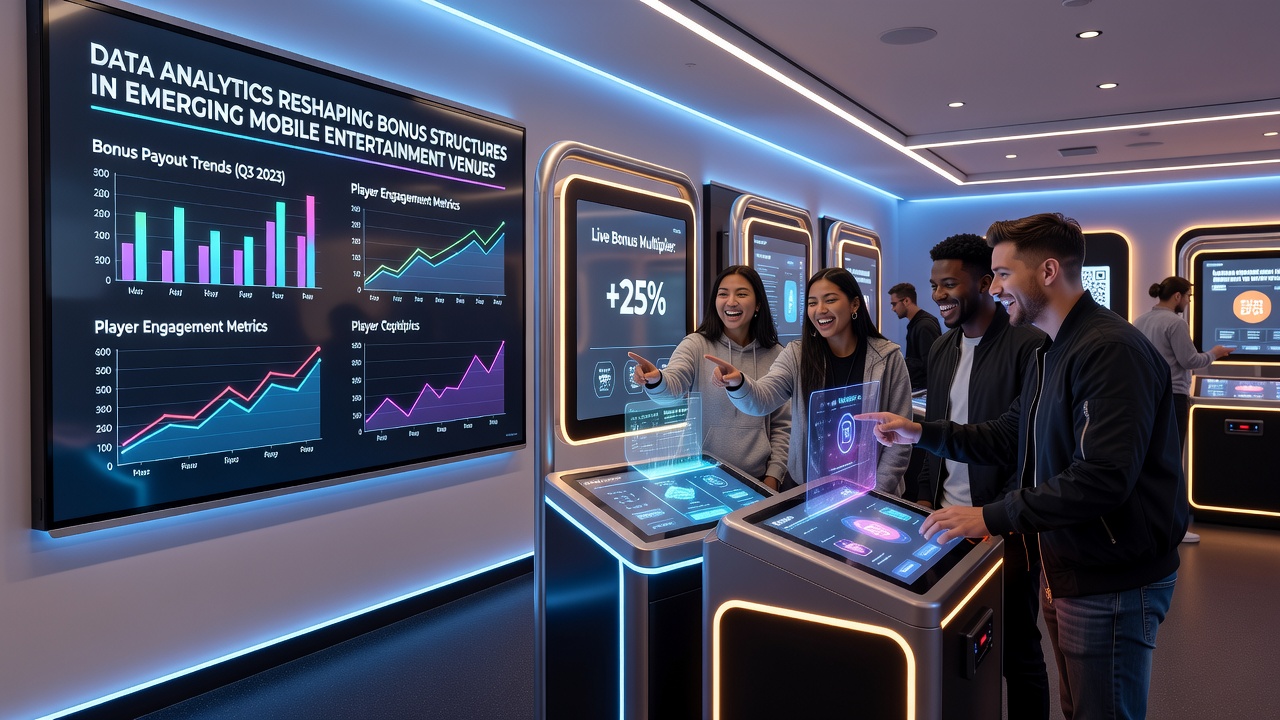
Real-time dashboards present operators with visualizations of live data streams, enabling quick adjustments when metrics deviate from expected ranges. For instance, a sudden drop in session length among a demographic group can trigger revised bonus parameters within hours rather than weeks. This responsiveness stems from automated pipelines that connect data warehouses directly to promotional engines, reducing manual intervention while maintaining compliance with regional rules.
Impact on Emerging Venue Types
Newer mobile-first venues, including hybrid social gaming and live dealer applications, rely on these analytics frameworks from launch. Their bonus architectures often incorporate tiered rewards that scale according to behavioral clusters derived from anonymized datasets. Figures released in industry reports for August 2026 highlight increased deployment of location-aware bonuses in regions where regulatory frameworks permit such features, with operators using geofencing data to tailor offers to users in specific time zones or urban centers.
Venues expanding into secondary markets have found that analytics-driven bonuses help address varying player expectations across jurisdictions. Data from the European Gaming and Betting Association reveals that cross-border operators who segment bonuses by regulatory environment achieve more consistent performance metrics. These structures frequently include conditional elements, such as bonus unlocks tied to verified play frequency, which analytics systems monitor and validate automatically.
Integration with Payment and Engagement Systems
Payment providers and analytics vendors have formed partnerships that link deposit behavior directly to bonus eligibility calculations. When a user selects a particular funding method, the system cross-references that choice against historical conversion data to determine an appropriate reward level. This integration reduces latency between deposit and bonus activation, a factor that multiple venue operators cite as contributing to smoother user experiences.
Engagement metrics extend beyond financial transactions to include social features and community challenges within the apps. Analysts track participation in these elements and adjust bonus triggers accordingly, creating loops where social activity influences reward availability. The result appears in aggregated performance data showing sustained daily active user counts when bonuses respond to both financial and non-financial signals.
Regulatory and Technical Considerations
Regulatory bodies in several jurisdictions require transparency around how bonus parameters are determined, prompting venues to maintain audit logs of analytics-driven decisions. These logs record which data points influenced specific offer modifications, allowing oversight without exposing proprietary algorithms. Technical teams implement encryption and access controls to protect the underlying datasets while still enabling rapid query responses for compliance reviews.
August 2026 updates to data protection standards in multiple regions have prompted venues to refine their analytics pipelines further, emphasizing consent management and anonymization techniques. Operators report that these refinements have not slowed the pace of bonus iteration but have instead encouraged more robust data governance practices that support long-term scalability.
Conclusion
Data analytics continues to supply the quantitative foundation for evolving bonus structures in mobile entertainment venues, with measurable effects on player segmentation, offer timing, and resource allocation. As these systems mature, the connection between behavioral data and reward design grows tighter, producing structures that adapt to observed patterns across diverse user bases. External reports from organizations such as the American Gaming Association and academic programs like the University of Nevada Reno’s gaming analytics initiative provide ongoing benchmarks that operators reference when evaluating new implementations.